Geology is a branch of natural science concerned with Earth and other astronomical objects. The study of rocks including what they are composed of and the processes by which they change over time. That is a long way to say they study the earth, past and present, to give us scientific data and discoveries. We here at Blissfully Enchanted love to know all about the crystals and minerals we are working and creating with. We decided that there must be others like us and wanted to help teach about the subject we all feel so deeply about. Make sure to click to follow our site, as we will update the highlighted stones as we update our bracelets.
Geology of Crystals & Minerals
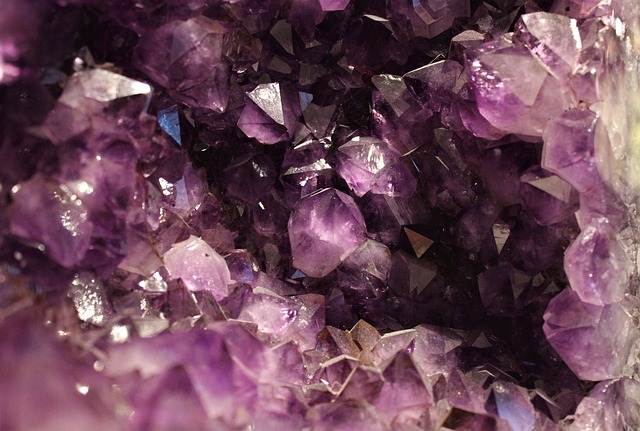
Amethyst
Amethyst is a purple variety of quartz that owes its memorable color to irradiation, impurities of iron and in some cases, other transition metals, and the presence of other trace elements. It is part of the hexagonal crystal system. Amethyst is a semiprecious stone with a vitreous or glassy luster.
Learn more: Our Products | Healing
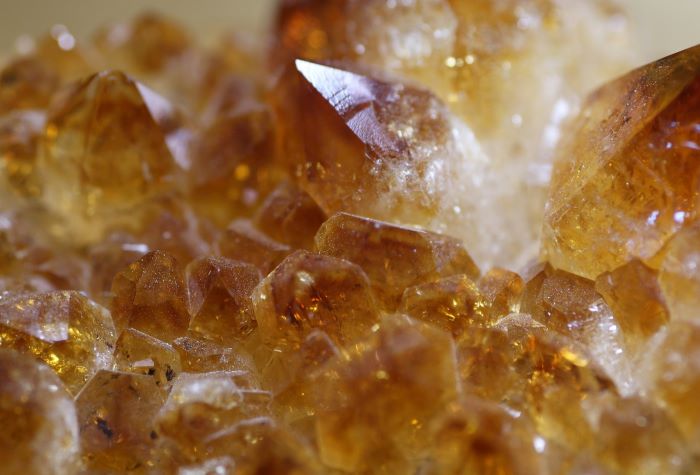
Citrine
Citrine is a variety of quartz whose color ranges from pale yellow to brown due to a submicroscopic distribution of colloidal ferric hydroxide impurities. Natural citrines are rare; most commercial citrines are heat-treated amethysts or smoky quartzes. However, a heat-treated amethyst will have small lines in the crystal, as opposed to a natural citrine's cloudy or smoky appearance.
Learn more: Our Products | Healing
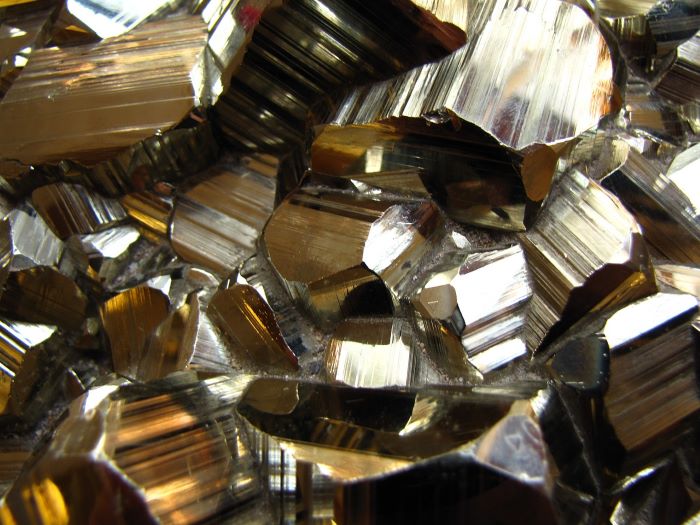
Pyrite
Pyrite, also known as Fool's Gold, is an iron sulfide mineral with a golden or brassy metallic luster. It is an opaque cubic crystal system that is formed into masses called framboids. It is the most common of the sulfide minerals and is found in igneous, metamorphic, and sedimentary rocks.
Learn more: Our Products | Healing