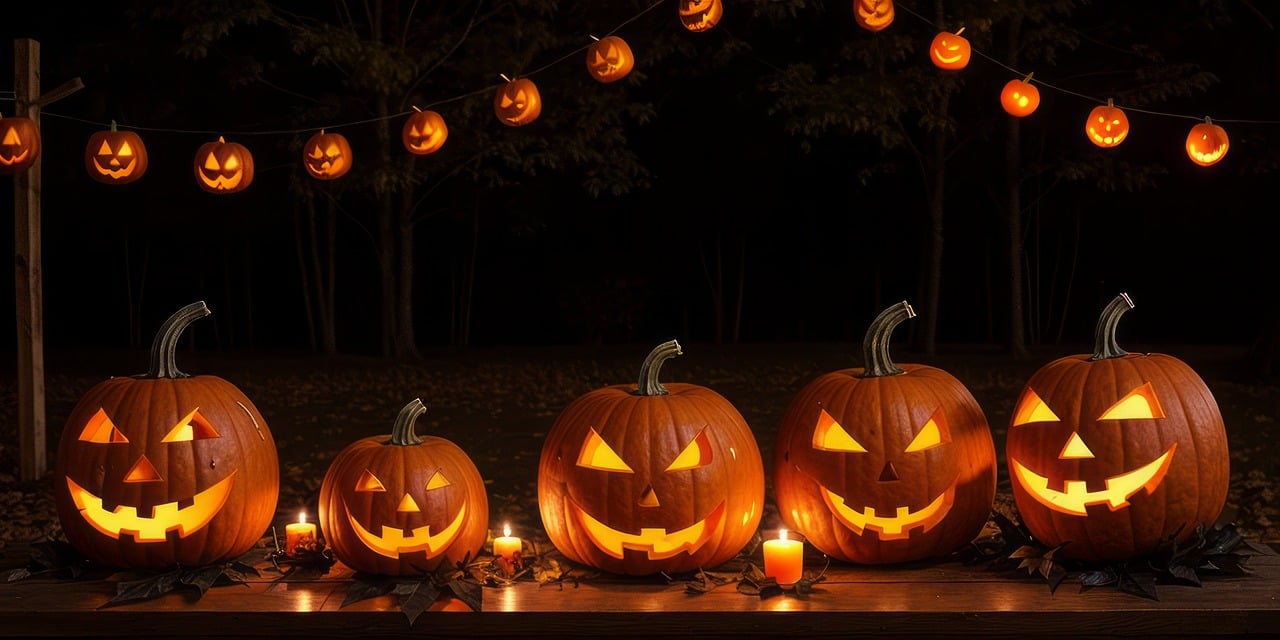
The history of Jack O' Lanterns comes with a tale of a man who had drinks with the Devil himself.
A man known as "Stingy Jack" in Ireland asked the Devil to drinks and asked him to turn into a coin to pay for them at the local tavern.
When the Devil obliged, he put the coin in his pocket with a silver cross to keep him in coin form.
The only way he would free him was under the condition that the Devil would not claim his soul when he passed.
"Stingy Jack" went on to trick the Devil a few more times over the years for favors and conditions on his passing until the day he died.
The Devil, ever true to his promise, and Heaven not wanting such a soul, "Stingy Jack" was cursed to roam the earth with only a lump of burning coal to light his way.
He carved a turnip to hold the coal and is rumored to still roam the countryside to this day.
Like all myths, this story was passed down generation to generation and people began to carve turnips and beets and set them aglow to ward of the likes of "Stingy Jack" at Halloween time.
With the belief of the thinning of the veil, people thought “Stingy Jack” might be back to play tricks on everyone.
The man began to be referred to as "Jack of the Lantern" when the Irish and other Europeans carved their tubers to keep him away.
As the myth fell out of favor but the carvings remained, the chosen vegetables became simply as known as Jack O' Lanterns.
You may wonder, "So how did we get to pumpkins?"
As people began to come to America, they brought their traditions.
With turnips and beets not being as plentiful, pumpkins were.
Pumpkins are native to North America and still remain abundant, so we find ourselves carving pumpkins,
turning them into Jack O' Lanterns every year, with many of us never knowing the myth of "Stingy Jack".
Interested in the history of Halloween, wearing costumes, and what Halloween looks like
in mordern times? Keep reading!